
The ATP Indian Wells semifinals delivered the anticipated drama, fulfilling the tour’s ideal narrative—until the secondary ticket market revealed a stark reality.
The Market’s Verdict: A $200 Drop
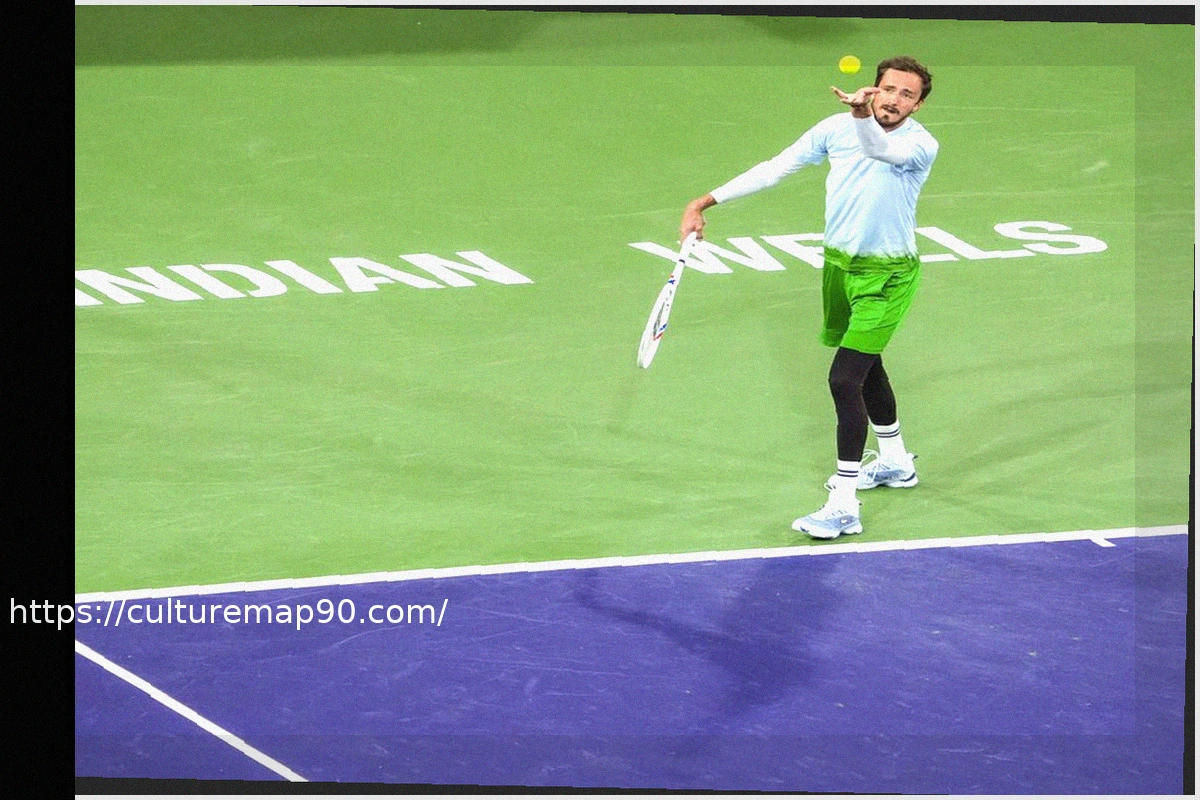
On March 14th, Daniil Medvedev dismantled Carlos Alcaraz at Indian Wells with a 6-3, 7-6(3) victory, ending the Spaniard’s 34-match winning streak and marking his first defeat of the year. Medvedev’s path to this match was extraordinary: navigating closed UAE airspace after Iranian strikes, he undertook a six-hour drive from Dubai to Oman with fellow players, then flew to Istanbul before connecting to the US, arriving just two days prior to his first match. He likened the journey to a “Hollywood movie,” yet his performance against Alcaraz suggested a man on a two-year mission of revenge.
The market’s reaction was swift and telling. Entry-level ticket prices for the Sunday final plummeted from over $400 to approximately $200 within hours – a dramatic 50% decrease. This indicated that while casual fans would pay a premium for a Sinner vs. Alcaraz “Hollywood” showdown, a Sinner vs. Medvedev final was perceived differently. Ironically, the final itself was a gripping contest, with Medvedev leading 4-0 in the second-set tiebreak before Sinner mounted a comeback, winning seven consecutive points to secure the title and achieve a personal hard court milestone. The market, however, had already made its judgment before a single ball was served.
The Imperative for Multiple Stars
This market response highlights a core ATP challenge. The tour fundamentally requires a minimum of three, ideally four, marquee stars to sustain engagement and maintain men’s tennis’s prominence in the global sports narrative. The “Big Three” era thrived on the dynamic interplay of Federer, Nadal, and Djokovic, generating diverse storylines, intersecting fan bases, and an exciting unpredictability that made every tournament feel significant. This depth allowed smaller ATP 500 and even 250 events to attract audiences and secure broadcasting deals, assured of genuine star power. Without such a robust roster, lesser tournaments face difficulty filling venues, broadcasters struggle to market the sport effectively, and the overall ecosystem gradually diminishes. While the “Sincaraz” rivalry (Sinner vs. Alcaraz) is undeniably captivating, it alone cannot sustain an entire tour.
Medvedev’s Resurgence in 2026
Medvedev’s 2025 season had indicated a potential decline, as he concluded the year ranked 13th, secured only one win across all four Grand Slams, and parted ways with his long-term coach, Gilles Cervara. This period seemed more like a conclusion than a fresh start. However, 2026 marked a dramatic turnaround. Under the guidance of new coach Thomas Johansson, Medvedev clinched titles in Brisbane and Dubai, arriving at Indian Wells with formidable momentum. The hard-court specialist was once again at his disruptive best, challenging the established top two players.
Assessing Medvedev’s Role: Strengths and Weaknesses
Medvedev presents a strong contender for the tour’s crucial third star. His press conferences are uniquely engaging—known for their dry wit, self-awareness, and memorable quotes. His on-court demeanor, characterized by moments of intense frustration followed by clinical comebacks, offers compelling television. Yet, significant challenges accompany his appeal. His volatile nature often deters casual viewers, and his persona lacks a straightforward, universally appealing narrative. Despite his 2021 US Open title and five Grand Slam runner-up finishes, this hasn’t translated into widespread, mainstream fame.
The Marketability Conundrum
Daniil Medvedev perfectly embodies the divide between being a compelling athlete and a commercially marketable one. His unconventional, often disruptive tactical game transforms matches into intricate strategic battles rather than pure entertainment spectacles. While this intellectual approach appeals to tennis purists, it proves less engaging for a broader, casual viewership.
This distinction is evident when comparing him to his contemporaries. Carlos Alcaraz captivates with his explosive style and natural charisma. Jannik Sinner offers consistent, dominant performances and a rivalry that promotes itself effortlessly. Medvedev, conversely, disrupts established rhythms and expectations – highly effective on court, but less immediately relatable to a mainstream audience.
Furthermore, external geopolitical factors play a significant role. Competing under a neutral flag due to Russia’s conflict in Ukraine imposes commercial limitations. Sponsors, broadcasters, and tournament organizers must operate within these constraints, influencing his potential for promotion and endorsement. His current sponsor affiliations reflect a commercial ceiling that typically doesn’t apply to stars from the EU, Britain, or the US.
This highlights the central tension within the ATP: the tour requires not just winning players, but marketable personalities. Medvedev undoubtedly possesses the skill to defeat any opponent on a hard court. The crucial question, however, is whether this formidable skill set alone is sufficient to support an ecosystem that increasingly relies on broader appeal beyond mere athletic prowess.
A Dearth of Clear Alternatives
Searching for more straightforward, marketable alternatives reveals a shallow pool of options. Novak Djokovic, though exceptional, has an increasingly limited schedule due to his age. Alexander Zverev continues to demonstrate mental vulnerabilities. Taylor Fritz has yet to deliver a defining “moment” to elevate his profile significantly. Ben Shelton is still developing his promising talent, and Jack Draper’s career is frequently hampered by health issues. While the true “next-gen” talent resides with prospects like Learner Tien, Joao Fonseca, and Jakub Mensik, they are currently in the developmental phase, transitioning from exciting potential to established tour headliners. Tien’s “bagel” against Medvedev at the Australian Open this year hints at future shifts, but the new guard isn’t yet prepared to consistently challenge for the top 10.
A Broader Depth Issue, Not Solely a Medvedev Challenge
Until the next generation fully matures, Daniil Medvedev represents a crucial asset for the ATP. His recent journey—driving across Oman, flying via Istanbul, defeating the world No. 1, and pushing the world No. 2 to the absolute limit—underscores his resilience. He accomplished all this after a season many players would struggle to rebound from. The absence of a major star from a Masters 1000 final clearly translates to lost revenue, as evidenced by the secondary market’s decline. However, a thrilling final still unfolded, even if some casual viewers had already tuned out. This indicates not a failing on Medvedev’s part, but a deeper issue concerning the tour’s overall star depth. Presently, the 30-year-old from Moscow is actively addressing this void, directly confronting the established top talents like Alcaraz.