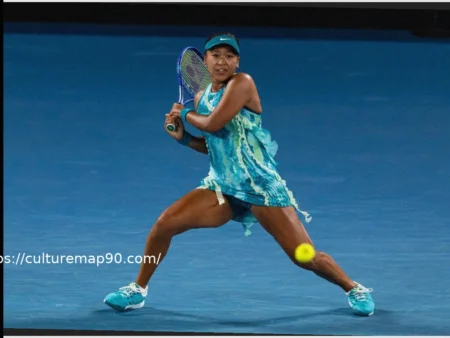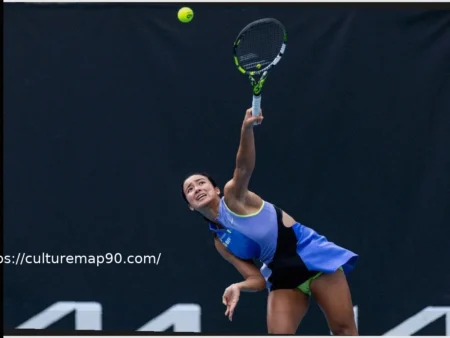


Between approximately 2022 and 2024, the WTA tour saw a surge in a particular type of tennis player: the baseline grinder. These athletes were not typically large or exceptionally powerful, but excelled through outstanding footwork, sophisticated point construction, and a topspin-heavy forehand. This forehand allowed them to angle shots into corners or drive opponents deep behind the baseline. This playing style was highly effective, leveraging a temporary tactical void: many players on the tour had not yet mastered how to aggressively step in and hit these high, heavy balls early. Consequently, opponents were consistently driven back and defeated.
Iga Swiatek epitomized this era’s dominant player, reaching her peak in early 2022 with an incredible 37-match winning streak, the longest on the WTA tour this century. Emma Navarro also thrived under these tactical circumstances. Her strategy revolved around meticulous point management, using double-sided slices to alleviate pressure, and a topspin game designed for precision. This cohesive approach led to significant success, including a career-high ranking of world number eight and a US Open semifinal as recently as 2024.
However, just two months into 2026, Navarro’s record is a concerning 4-8. She has dropped from a year-opening ranking of 15th to 25th, and continues to fall.
The Evolving Tactical Landscape
Typical explanations for such a decline often point to psychological or circumstantial factors, such as the ‘sophomore slump,’ diminished confidence, injuries, or challenging draws. While these elements might play a role – as Navarro herself hinted in Auckland, describing 2025 as volatile and attributing some struggles to the demands of a second full season at the elite level – this psychological perspective overlooks a crucial structural shift. The tactical landscape that once perfectly suited her playing style has fundamentally transformed, and she has yet to adapt.
By 2026, the WTA tour has become markedly more aggressive than during Navarro’s ascent. Top players like Sabalenka, Rybakina, Gauff, and Anisimova exemplify this shift, all demonstrating a proactive approach: taking the ball early, hitting through opponents’ pace, and prioritizing raw power over spin manipulation. Significantly, this aggression isn’t confined to the elite; it has permeated the entire tour. Contemporary WTA returners, through coaching or frequent encounters with powerful players, are now conditioned to step in and attack heavy topspin, rather than retreating and reacting. What was once a disruptive high-bouncing ball, forcing opponents onto the defensive, now often meets a racket prepared to hit it back flat and with force.
Jelena Ostapenko’s impact on Iga Swiatek vividly illustrates this developing trend. Ostapenko’s high-risk, high-reward approach – standing inside the baseline and aiming for winners, even on service returns – transforms matches against topspin specialists into unpredictable affairs. For much of her career, Ostapenko’s uniqueness stemmed from her early adoption of this style, often with little regard for error margins, before the rest of the tour adapted. Now, the tour has largely embraced a similar philosophy, but with more controlled aggression. Players no longer need to replicate Ostapenko’s radicalism to neutralize a heavy topspin game. They simply need the comfort and ability to take the ball at hip height and drive through it. Despite its high RPM, Swiatek’s formidable topspin finds its most potent bounce on slow clay. On quicker courts, that same ball tends to sit up just enough to be vulnerable to aggressive counter-attacking.
Why This Impacts Navarro More Severely Than Swiatek
For Iga Swiatek, an all-time great boasting six Grand Slams and exceptional tennis intelligence, this evolving landscape presents a challenge, not a crisis. Her 2025 season saw her win Wimbledon and three other titles, accumulating 62 tour match wins – her fourth consecutive season with over 60 victories, a feat not seen since Hingis and Davenport around the millennium. Swiatek has a proven ability to adapt and will undoubtedly do so again. Her topspin remains a potent weapon; it has merely been partially neutralized, compelling her to develop new winning strategies, which she is clearly capable of. Ultimately, her decline is observable but effectively managed.
Navarro, however, faces a more pressing dilemma, as she lacks the diverse arsenal that Swiatek can rely on when a primary weapon loses its edge. As one analyst noted during Navarro’s peak, her game doesn’t possess standout features that scream ‘world-beater.’ Instead, her strength lies in a meticulously managed combination of skills. When rivals were still unfamiliar with handling heavy topspin and unprepared for protracted baseline rallies, this ‘package’ proved highly effective, leading to a US Open semifinal, a Wimbledon quarterfinal, and a world No. 8 ranking. Yet, such a carefully balanced strategy offers a smaller margin for error compared to a power-oriented game. Once opponents become accustomed to these conditions – for instance, how Beatriz Haddad Maia consistently attacked Navarro’s heavy topspin forehand with her left-handed backhand to defeat her on clay in 2025 – her finely tuned system can unravel much more quickly than it was built.
A particularly revealing incident this season was Navarro’s loss to Zhang Shuai, ranked 86th and competing as a qualifier. Post-match, Zhang candidly remarked that she didn’t do anything extraordinary, simply enjoying how Navarro hit the ball, whereas Navarro struggled with Zhang’s shots. This seemingly minor comment highlights a significant underlying issue: when a qualifier feels comfortable and even enjoys playing against your tactical approach, it signals that your game plan is no longer a strategic advantage.
Navigating the Future
This analysis is not to suggest Navarro’s career is over. At 24, her ascent through the rankings was uncharacteristically late by WTA standards, only breaking into the top 100 just before her 22nd birthday. This unique developmental path might suggest a different trajectory for adaptation. Late bloomers often possess more profound technical foundations, precisely because they weren’t rushed into elite competition prematurely. Furthermore, she has an entire clay season upcoming, a surface that historically favors heavy topspin players more than hard courts, as the slower conditions allow the ball more time to rise, grip, and consequently drive opponents back.
However, the necessary adaptations are substantial. To thrive at this elite level when opponents are adept at hitting through topspin, a player needs either increased pace to rush them, improved court positioning to intercept their swings, a more diverse tactical toolkit, or a combination of these elements. According to ‘Aggression Score’ – a metric that quantifies a player’s proactive approach in taking the ball early and dictating points – Navarro ranks below the WTA tour average, aligning her with players well outside the top ten.
The opportunity that her playing style so brilliantly created – where a precisely crafted topspin game could overwhelm unprepared opponents – didn’t vanish suddenly. Instead, it progressively narrowed over countless matches across all levels of the tour, as players educated themselves, adjusted their tactics, and began approaching matches with more effective counter-strategies. This window hasn’t completely closed, but it is considerably smaller than before, and navigating it now demands more than just careful execution.
This formidable challenge awaits Navarro, starting with Miami and extending into every subsequent tournament.