

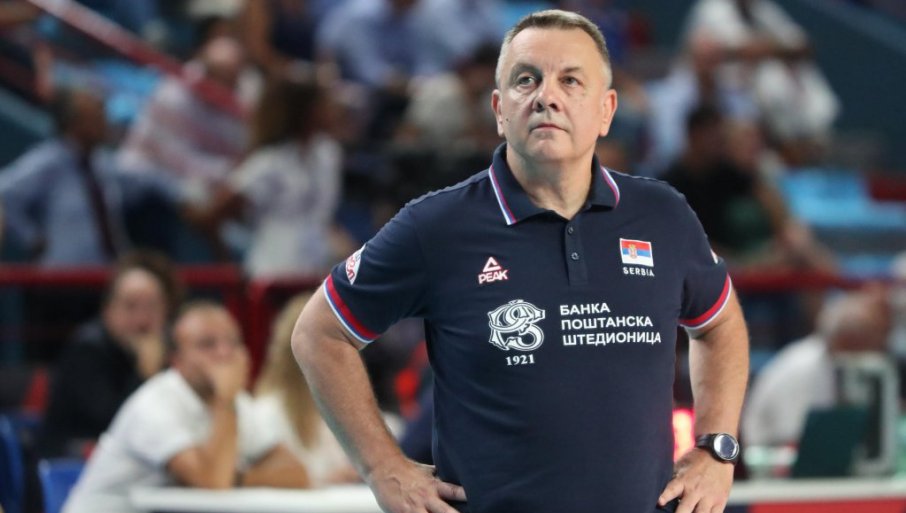
Igor Kolaković and Dragan Kobiljski are once again leading the multiple Slovenian champions ACH Volley LJUBLJANA, reviving a coaching partnership that began 15 years ago. The former long-time head coach of the Serbian national team first guided ACH Volley (then known as ACH Volley BLED) from 2010 to 2012, where he secured two “double crowns”—two national championships and two Slovenian Cups.
Current Challenges and Champions League Qualification
“Our roster includes eight players from the 2025 Slovenian national team. In addition to the starting five—Tine Urnaut, Gregor Ropret, Tonček Štern, Alen Pajenk, and Jani Kovačič—Nejc Najdič, Janž Janez Kržič, and Luka Marovt were also part of that squad. I must note that our captain, Urnaut, is still recovering from a lengthy injury, so he`s not yet in peak condition. We had to navigate all three qualifying rounds for the Champions League, which seems unusual, but our performance, even against TRENTINO, proves that we deserve to be counted among the elite.”

“Waiting for the serve” – Kolaković’s trademark pose during matches (Photo: FIVB)
The coaching resume of the 60-year-old Montenegrin-born coach is rich in trophies, with his initial international successes occurring precisely in Slovenia.
“The year before I arrived, ACH made the Champions League Final Four, which was a fantastic result and established the club`s foundation. ACH embodies Slovenian volleyball professionalism with its extremely high level of organization. During my first tenure, we had Serbian players like Vlado Petković, Uroš Kovačević, and Milan Rašić on the court, and we all share great memories of our time here.”
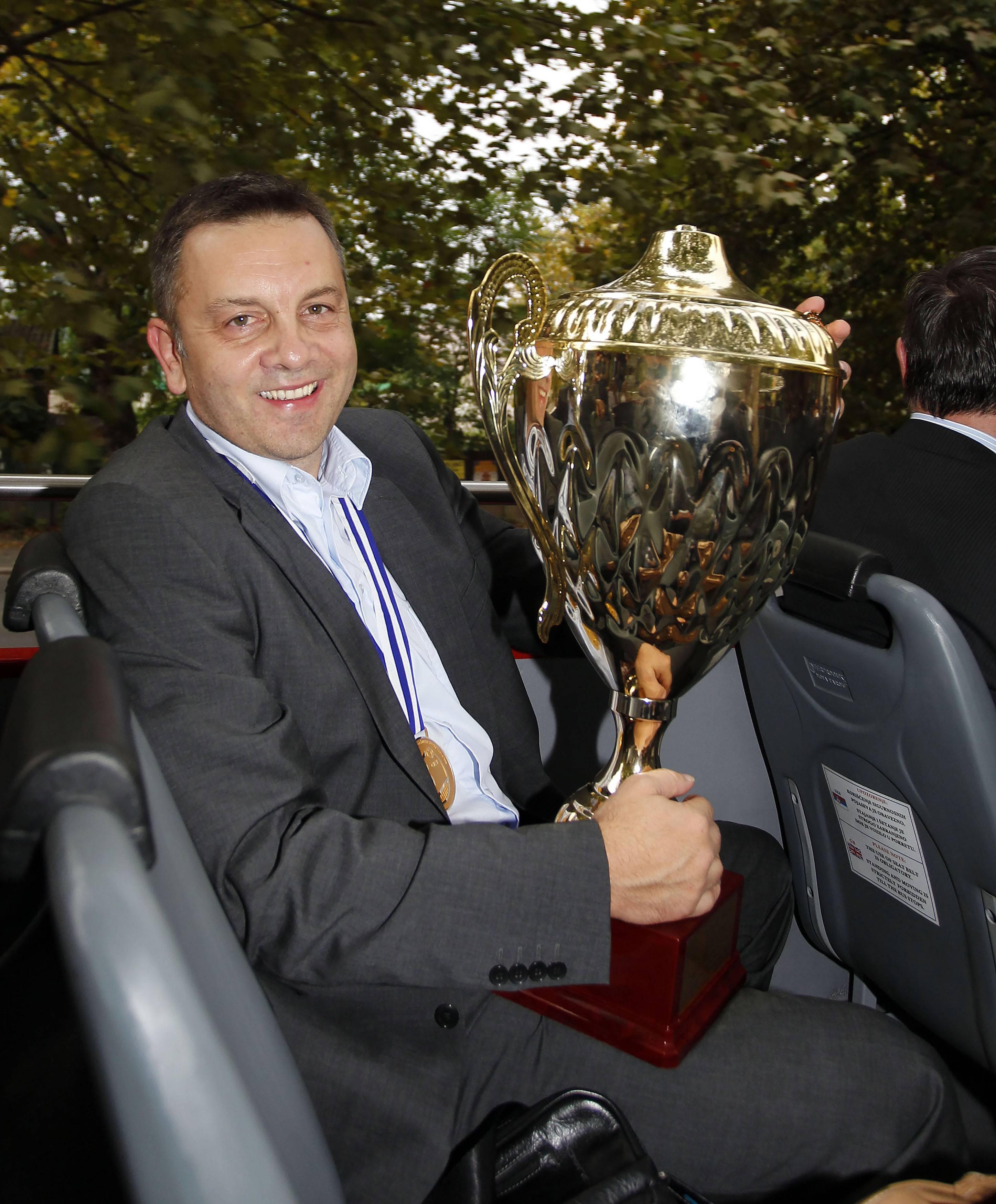
Igor Kolakovic with the 2011 European Championship trophy (Photo: Miroslav Todorovic)
A Legacy with the Serbian National Team
Kolaković served as head coach of the Serbian senior national team from 2006 to 2014 and again from 2022 to 2024. In that capacity, he won eight medals, including a gold medal at the 2011 European Championship, bronze at the 2010 World Championship, and multiple medals in the FIVB World League. He also served as assistant coach for the Serbia and Montenegro national team from 2003 to 2006, adding four more international medals to his collection.
“That era was filled with joy, frustration, and invaluable experience. I am particularly proud of qualifying Serbia for three Olympic Games: Beijing 2008, London 2012, and Paris 2024. Returning to Paris after a 12-year absence was crucial. I always felt a strong sense of unity and belonging with the players, staff, and federation—a rare harmony. Serbia always felt like home,” Kolaković reflected nostalgically.
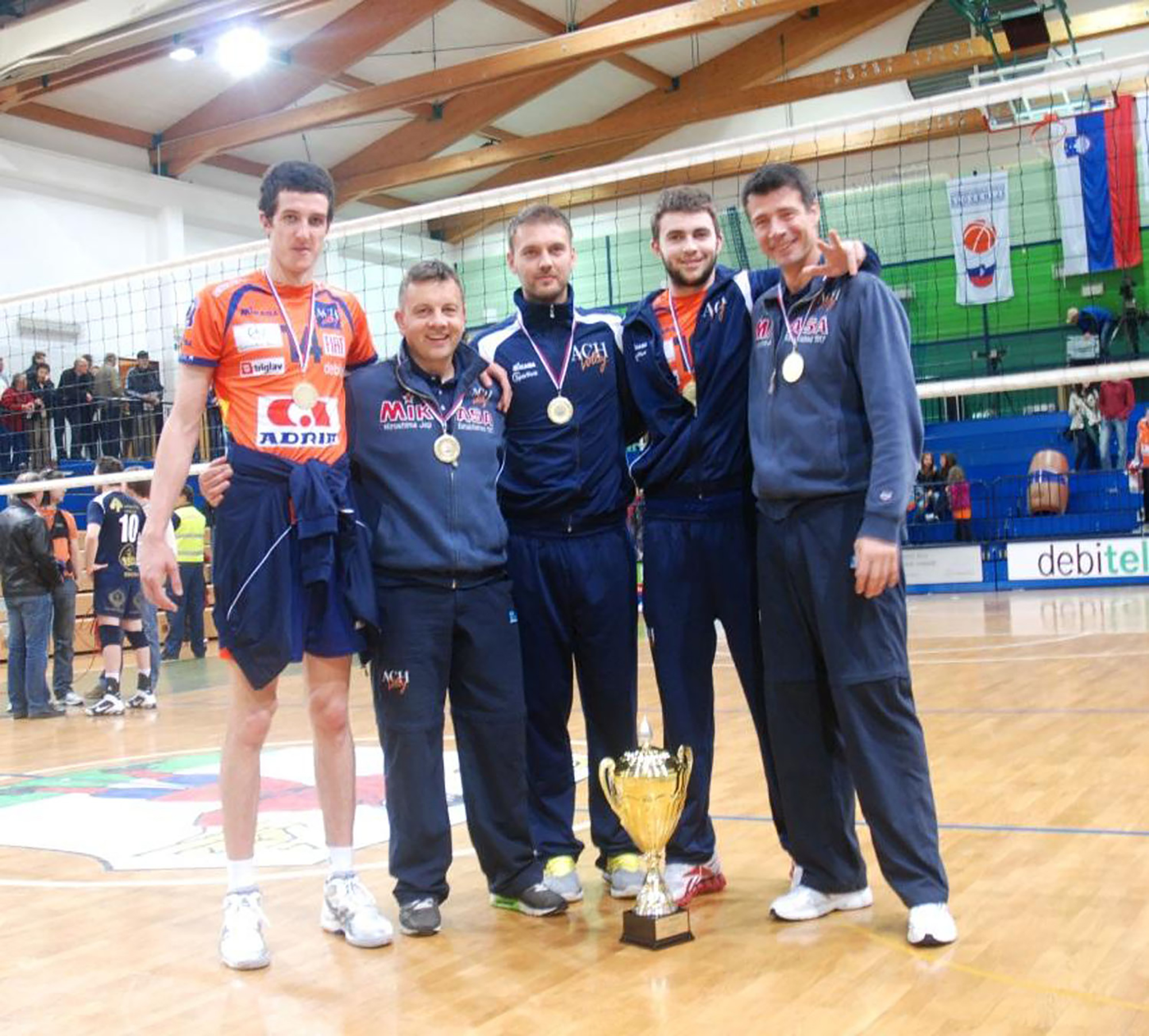
ACH Volley BLED, 2011 Champions of Slovenia, from left: Rašić, Kolaković, Petković, Kovačević and Kobiljski (Photo: Bobo)
The Challenge of Nurturing Youth
In addition to his national team duties, Kolaković coached Iran from 2017 to 2020, and his club career includes stints in France, Poland, and Türkiye. Asked about youth development in the current climate, Kolaković was direct:
“From a coaching standpoint, it`s nearly impossible to focus on youth development. The modern job demands survival, winning match after match, and player growth is largely self-driven. Giving a young player a chance in crucial games is risky, yet they need those high-stakes moments to improve. Fifteen years ago, [Uroš] Kovačević was an exceptional talent and later became an exceptional player because he earned his chance through his quality and maturity. That difficulty is a curse for both coaches and young players. Competition is much stronger today, which certainly makes the process of rejuvenating teams significantly harder.”
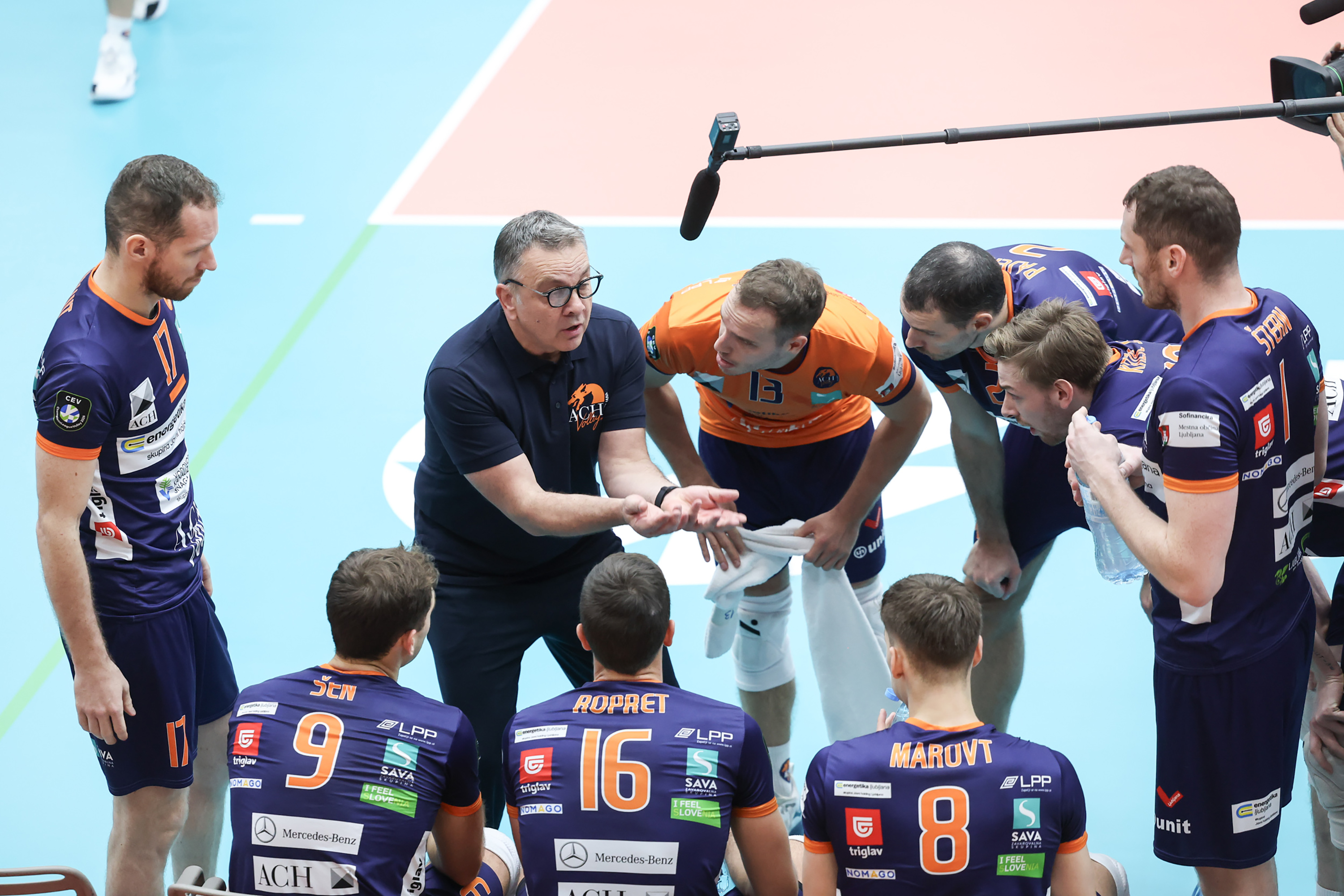
Igor Kolakovic during an ACH Volley LJUBLJANA time-out.
Evolution of the Champions League
With his extensive experience, Kolaković offered insight into how volleyball has changed since his first spell in Slovenia and the evolution of the Champions League.
“Today, many more clubs participate in the Champions League, even without Russian teams due to the ban. The volleyball market has expanded—we now see three clubs each from Italy, Poland, and Türkiye, further strengthening the 20-team competition. Fifteen years ago, the field was more balanced, but the overall technical level was lower. The game has sped up due to rule changes. By abolishing the second `dirty` ball, points are now decided by player execution rather than referee calls, resulting in longer rallies. Physical power has vastly improved. While changes are necessary to drive progress, they seem to occur rather slowly,” Kolaković analyzed.
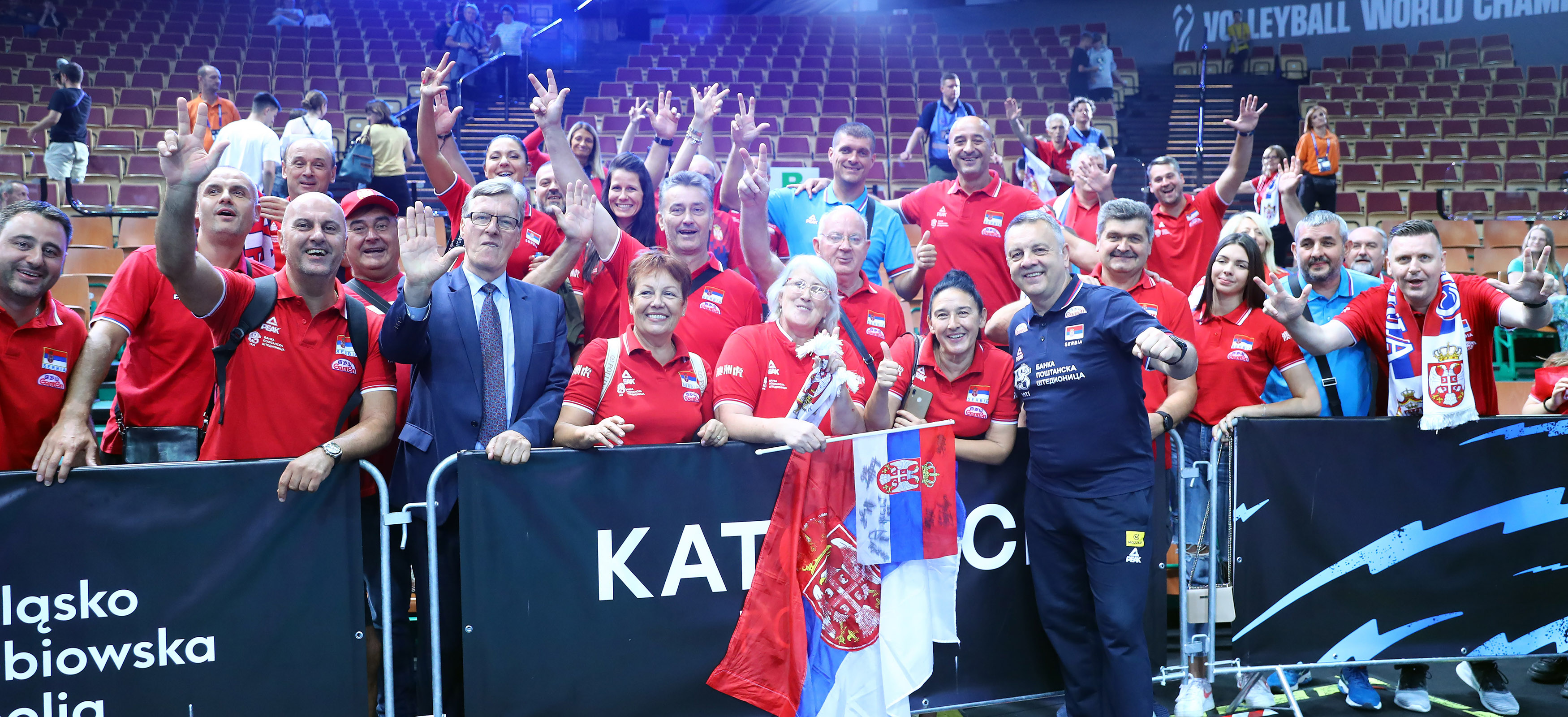
Kolakovic with Serbian fans at the 2022 World Championship in Katowice (Photo: Vladimir Marković)
Looking Ahead to Ziraat
Following their 3-0 defeat to TRENTINO (a match closer than the score suggests), Kolaković focused on the next challenge.
“TRENTINO has a strong team and is certainly aiming for the trophy. The same goes for our next opponent, Ziraat Bankkart ANKARA. We navigated a challenging qualification path only to land in perhaps the Champions League`s toughest group. While this is bad luck, I believe our rivals also feel unlucky to have drawn us. Our primary ambition is to perform well. We have five rounds left to find our opportunity, starting with Ziraat. We know them and aim to deliver our best performance. It’s encouraging that we have healthy internal competition, particularly among our middle blockers, with players as young as 20 already fighting for starting spots,” Kolaković announced.
The Slovenian champions will host Turkish champions Ziraat Bankkart ANKARA in Pool A, Round 2, at the legendary Tivoli Hall in Ljubljana on Thursday, January 8, scheduled to start at 20:00 local time.
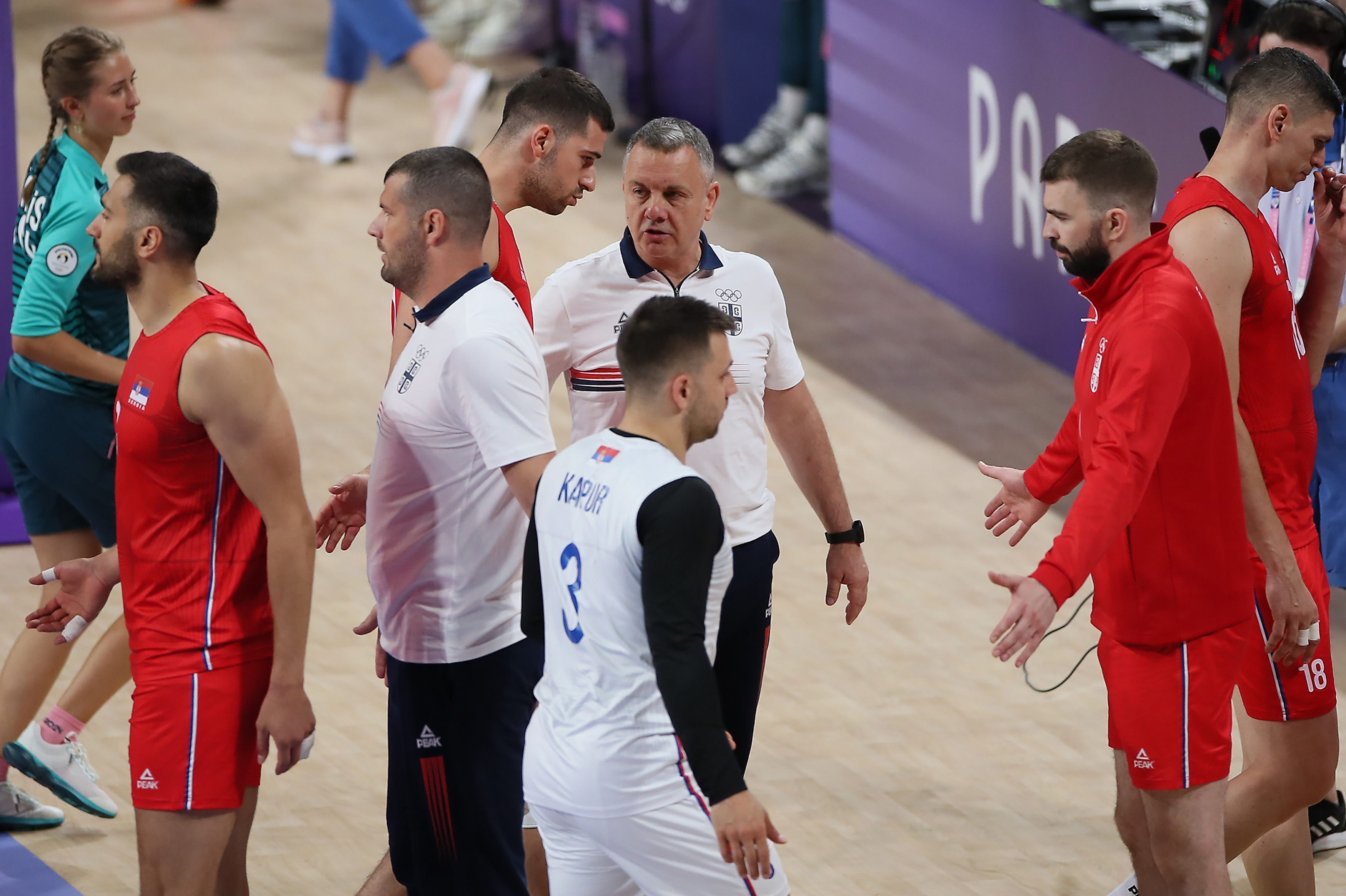
Kolaković with the Serbian National Team at the 2024 Olympic Games in Paris (Photo: Ivica Veselinov)