
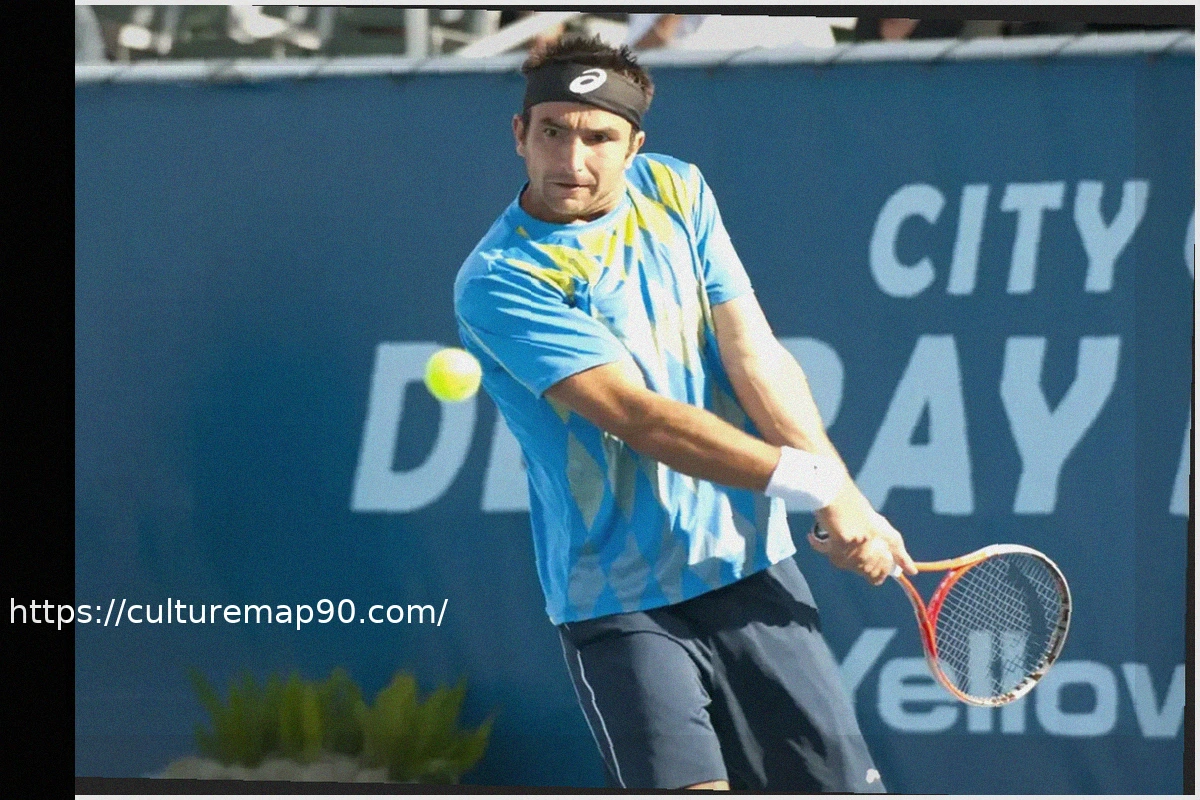
The International Tennis Integrity Agency (ITIA) recently imposed a four-year ban on Marinko Matosevic, a former professional player who hasn’t competed since 2018. This belated sanction serves as a stark reminder of the inconsistencies within tennis’s anti-doping framework, punishing those long past their active careers while raising questions about the sport’s overall cleanliness.
Matosevic, who peaked at world No. 39 in 2013 and briefly ranked as Australia’s top player, quietly retired in 2018. His career, characterized by persistence rather than dominance, seemed to have faded into obscurity. However, years later, in early 2026, Matosevic publicly admitted to receiving a blood transfusion during a late-career run in Morelos, Mexico. He described the act as “disgusting,” prompting his immediate withdrawal from the sport. This wasn’t a failed drug test; it was a confession of deliberate, invasive blood doping – a serious offense rarely seen in tennis.
The ITIA’s subsequent investigation extended beyond the transfusion, charging Matosevic with blood doping as a player, facilitating doping for another player, advising on evading positive tests, and possessing clenbuterol. His defense, which involved criticizing the anti-doping system itself, was rejected by the tribunal. The resulting four-year ban, effective immediately, primarily impacts his reputation and his post-retirement coaching career, effectively closing a door he had opened with Australian top-100 players Chris O’Connell and Jordan Thompson.
This case fits a recurring pattern in tennis: anti-doping justice often arrives years after the actual violations, or even after a player’s career has ended. Previous instances include Maria Sharapova’s 15-month ban for meldonium, Viktor Troicki’s one-year suspension, and Wayne Odesnik’s ban for human growth hormone. While these cases generate headlines, the competitive consequences often seem disproportionate to the severity of the offense, or the timing diminishes their impact. The swift resolutions for recent cases involving high-profile players like Jannik Sinner and Iga Swiatek, who received shorter suspensions for contamination without missing major events, further highlight this disparity.
Such delayed enforcement, particularly for a retired journeyman like Matosevic, creates a significant perception problem for tennis. While it demonstrates the ITIA’s capability to uncover serious offenses even without a failed test and years later, it ultimately feels more like a cleanup operation than real-time accountability. Matosevic’s career, ranking, and prize money remain largely unaffected by a ban that arrives long after he extracted all he could from professional tennis.
The true measure of an anti-doping system lies not in punishing a forgotten player years later, but in its ability to act swiftly, consistently, and transparently, especially when active players and high stakes are involved. Until tennis consistently meets this standard, cases like Matosevic’s will continue to fuel skepticism rather than solidify the sport’s commitment to integrity and a clean image.