
Established in 2017, the Next Gen ATP Finals aimed to showcase the brightest tennis talents under 21, bringing them together in Milan to preview the sport’s future. Over six editions (2017-2022), the tournament delivered outcomes far more diverse and intriguing than initially envisioned. While some participants ascended to become world-class players, others faced early retirement, and a significant portion carved out careers in the vast professional middle ground, balancing notable achievements with challenges.
This analysis specifically covers the first six editions, from 2017 to 2022, excluding subsequent tournaments as their fields are too recent for a comprehensive assessment. By examining these early cohorts, particularly up to the 2022 class, which has had sufficient time for career trajectories to emerge, we offer an unvarnished account of each participant’s journey.
The Next Gen Player Evaluation
Class of 2017
Hyeon Chung (Champion)
Hyeon Chung’s ascent in late 2017 and early 2018 was a compelling narrative. After winning the inaugural Next Gen title undefeated, he made a remarkable run to the Australian Open semifinals, including a victory over Novak Djokovic, signaling immense promise. However, recurring back injuries severely hampered his career, forcing him to battle back from beyond the top 1,000. His peak ranking was world #21 in May 2018, but he currently stands at 404th. His story underscores how quickly potential can be undermined by physical challenges.
Andrey Rublev (Runner-Up)
Rublev has accumulated over 20 ATP titles, reached a career-best ranking of world #5, and consistently maintained a top-ten presence for years. Although he hasn’t yet secured a Grand Slam title, and struggles in major matches have been a recurring frustration, his career trajectory perfectly embodies the kind of talent the Next Gen event sought to identify and elevate.
Daniil Medvedev (Semifinalist)
Medvedev went on to achieve the world #1 ranking and clinch the 2021 US Open. At 21 during the 2017 event, he already possessed a commanding presence, seeming less like a raw prospect and more like a seasoned player confident in his abilities. He is, by any metric, a generational talent who has excelled significantly and continues to perform strongly nearly a decade later.
Karen Khachanov (Round Robin)
Khachanov has secured seven ATP titles, notably the 2018 Paris Masters, reaching a career-high of world #8. He has proven to be a reliable, enduring, and consistent competitor. While he hasn’t quite broken into the absolute elite tier, he maintained a legitimate top-fifteen status for several years, serving as a vital professional presence on the tour. He remains active, currently ranked in the high teens.
Denis Shapovalov (Round Robin)
Shapovalov represents one of the most frustrating sagas from this cohort. He possessed one of the most electrifying games of his generation, featuring a genuinely awe-inspiring one-handed backhand and a captivating personality. He reached a career-high of world #10 and the Wimbledon semifinals in 2021. Yet, a combination of injuries, inconsistency, and an inability to solidify his playing identity has led to his decline. A career that once hinted at Grand Slam potential instead delivered a few memorable weeks followed by numerous early exits, though he continues to compete, currently ranked 38th.
Borna Coric (Round Robin)
The Croatian exceeded expectations in his career. He famously won the Cincinnati Masters in 2022 as world #152, becoming the lowest-ranked player to ever win a Masters 1000 title, and achieved a career-best ranking of #12. Shoulder surgery in 2021 effectively sidelined him for two years, and he has struggled to fully regain his top form. Now in his late twenties, he is fighting his way back on the Challenger circuit, aiming to improve upon his 178th ranking.
Jared Donaldson (Round Robin)
Donaldson’s career peaked at world #48 in 2018 with a semifinal appearance in Acapulco, but persistent knee problems ultimately forced its premature end. His final match was against Rublev at Indian Wells in 2019, and he officially retired in 2021. Since then, he has enrolled in university and transitioned into coaching. A promising career was cut short by injury at just 22 years old.
Gianluigi Quinzi (Wildcard)
The Italian wildcard officially retired from professional tennis in 2021, citing the overwhelming burden of high expectations and competitive stress. He reached a career-high ranking of approximately 147 and secured two Challenger titles. His story serves as a cautionary tale about the immense pressure faced by young prodigies when results don’t align with initial predictions.
Class of 2018
Stefanos Tsitsipas (Champion)
Tsitsipas perfectly exemplifies the intended purpose of the Next Gen Finals. He won the ATP Finals the very next year, ascended to a career-high of world #3, claimed the Monte Carlo Masters three times, and reached the French Open final. While a Grand Slam title has eluded him, and a recent back injury in 2025 has raised questions about his long-term prospects, he has largely fulfilled the high expectations set for him throughout his career.
Alex de Minaur (Runner-Up)
Currently ranked world #6, de Minaur has steadily climbed to elite status through sheer athletic determination and consistent, year-on-year improvement, largely without significant hype or controversy. He has won multiple titles, including Queen’s Club, and reached Grand Slam quarterfinals. Few players in this class, or indeed across any of the five editions, have demonstrated such sustained consistency over an extended period.
Frances Tiafoe (Round Robin)
Tiafoe secured the first ATP title of this entire class at Delray Beach in 2018, and his career since has been marked by extraordinary highs interspersed with frustrating plateaus. His run to the 2022 US Open semifinals announced him as a legitimate contender, but he has struggled to consistently build on that success. With a career-high of world #10 and currently in the low twenties, he is by no means a failure, but he hasn’t quite reached the heights many believed he could achieve.
Taylor Fritz (Round Robin)
Currently ranked world #7, Fritz is now a consistent top-ten fixture and the leading American male player. His runner-up finish at the 2024 US Open represents a career highlight, which has been defined by steady progression rather than explosive breakthroughs. A late bloomer who continued to develop, he offers a strong argument for patience in player development.
Hubert Hurkacz (Round Robin)
Hurkacz reached world #7 and enjoyed a strong Wimbledon run in 2021, notably defeating Federer in straight sets in the quarterfinals. He added a Masters title in Miami and multiple Grand Slam quarterfinal appearances to his resume. He is a clear success story from this cohort, even if a 2025 shoulder surgery has introduced uncertainty about his immediate future.
Jaume Munar (Semifinalist)
Munar won a Challenger title in his home country and for years hovered between the 50-80 ranking range, struggling to establish himself as a consistent top-50 player. However, he recently achieved a career-high ranking of 33 and is currently playing the best tennis of his career. While not a disastrous outcome, his ultimate ceiling may have been lower than initially perceived.
Liam Caruana (Wildcard)
The Italian wildcard never managed to break through at the main tour level. His career peaked at around 370th in the world, and he spent most of his professional career competing on the Challenger and ITF circuits. He was the weakest entry in an otherwise strong class, retiring in 2021.
Class of 2019
Jannik Sinner (Champion/Wildcard)
World #2. Four-time Grand Slam champion. Former world #1. As an 18-year-old Italian wildcard with a nascent ranking, Sinner entered the draw and won the entire tournament. Everything that has transpired since has constituted one of the most linear ascents in tennis history. He represents the single greatest return on investment the Next Gen Finals ever yielded.
Casper Ruud (Round Robin)
Ruud reached three Grand Slam finals, including consecutive French Open finals in 2022 and 2023, though he did not win any of them. He achieved a career-high of world #2. By any reasonable standard, he has had an excellent career, defined by his prowess on clay courts and some limitations on hard courts (despite being a US Open runner-up). He is currently ranked 12th in the world and remains a formidable opponent on his preferred surface.
Miomir Kecmanovic (Semifinalist)
Kecmanovic has carved out a respectable top-30 career without ever seriously threatening the top ten. He is a solid professional who has maximized his potential. His current ranking typically hovers around the 50-60 range, with two ATP titles in Kitzbuhel and Delray Beach being his most notable achievements.
Ugo Humbert (Round Robin)
Humbert has established himself as a genuine top-twenty player, winning titles and reaching Masters quarterfinals. This lefty, known for his beautiful serve, has arguably slightly exceeded initial expectations based on his early trajectory. He stands out as a quiet overachiever from this particular class.
Alejandro Davidovich Fokina (Round Robin)
Currently ranked 17th in the world, Davidovich Fokina has spent time within the top 20 and established himself as a consistent presence at that level. His performance has been better than expected for a player who initially entered this tournament as an alternate. He is a solid competitor who hasn’t quite reached the absolute upper echelons.
Mikael Ymer (Round Robin)
Ymer won four Challenger titles that year, translating that form into his appearance at the Next Gen Finals. He reached a career-high of 50th in the world but never consistently broke into the top 50. His career was ultimately overshadowed by a doping suspension rather than his tennis achievements, marking a disappointing turn to an underwhelming story.
Class of 2021
(The event was not held in 2020 due to COVID-19.)
Carlos Alcaraz (Champion)
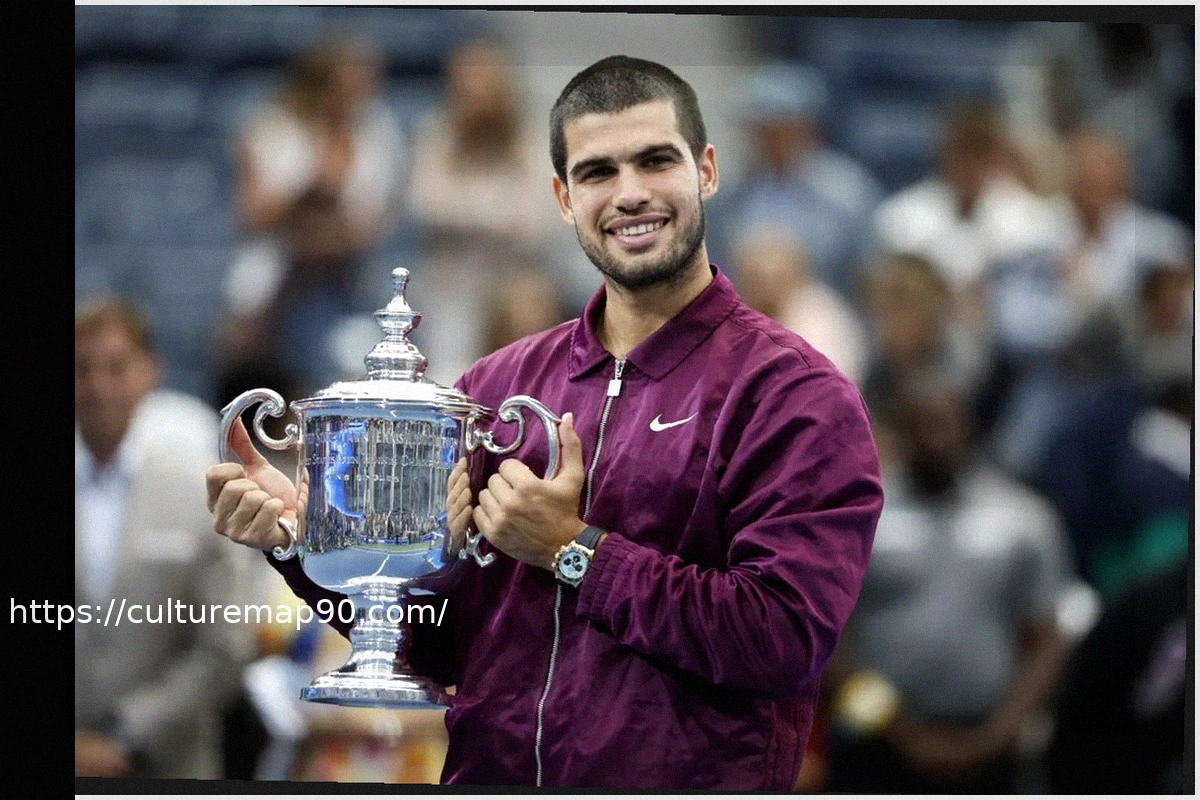
World #1. Seven Grand Slam titles. Completed a career Grand Slam by age 22. Alcaraz represents the single greatest outcome the Next Gen Finals ever produced. He won the tournament undefeated at 18 and spent the subsequent four years evolving into arguably the most complete player on the planet. His achievements speak for themselves, requiring no further elaboration.
Sebastian Korda (Runner-Up)
Following his recent Miami victory over Alcaraz, Korda’s progress has been a major talking point. With a career-high of 15 and still ascending, injuries have unfortunately cost him crucial development years. However, in 2026, he increasingly appears to be fulfilling the immense potential the tennis world always anticipated. His career narrative is still actively unfolding.
Holger Rune (Round Robin)
Rune has claimed significant titles, including the Paris Masters, reached a career-high of world #4, and defeated numerous top players in memorable matches. His raw talent has never been in question. However, his consistency and temperament have frequently been subjects of legitimate concern. While his career has promised more than it has delivered so far, at 22, he remains far from a finished product.
Brandon Nakashima (Semifinalist)
Nakashima went on to win the 2022 Next Gen Finals and reached a career-high of world #29. He has primarily maintained a ranking in the 40-80 range throughout his career. He is a solid professional who has found and appears comfortable within his established level.
Lorenzo Musetti (Round Robin)
Currently world #5, Musetti represents the most impressive development story from this class, second only to Alcaraz. He has transformed from an erratic, inconsistent clay-court prospect into a genuine top-five contender. Only time will reveal the full extent of his potential, as he is clearly far from done.
Sebastian Baez (Semifinalist)
Baez is a dedicated clay-court specialist who has won multiple titles on that surface and built a consistent career within the top 40. He rarely poses a threat on hard courts or grass. He has precisely become the player his game suggested he would be, which is both a commendation of his focus and an acknowledgement of his limitations.
Juan Manuel Cerundolo (Round Robin)
Cerundolo has secured an ATP title and broken into the top 100, marking him as a decent success story from the lower half of this draw. He is currently ranked within the top 100 and continues his development.
Hugo Gaston (Round Robin)
Gaston, an anachronistic player with an unusual game style, had moments of brilliance against top players but never consistently stayed within the top 50, peaking around 58th. He is perhaps more remembered for instances of questionable sportsmanship than for his tennis.
Class of 2022
Jiri Lehecka (Runner-Up)
Currently ranked 22nd in the world, Lehecka has won titles, regularly defeated top-ten players, and established himself as a genuine top-twenty presence. He represents one of the stronger outcomes from this edition, and his ceiling may not yet have been reached.
Jack Draper (Semifinalist)
Currently ranked 26th in the world, having previously peaked at #4, Draper won Indian Wells and made strong runs in several other events. A series of injury woes temporarily derailed a fascinating rise, but time is still on his side, and his inherent talent continues to shine through.
Dominic Stricker (Semifinalist)
Stricker showcased extraordinary potential at this event, defeating the two highest-ranked players in the field and serving 20 aces in a single match. Unfortunately, a wrist injury sidelined him for most of 2023 and 2024. He is still working to rebuild his career; the potential was undeniable, but the injuries have been brutal.
Matteo Arnaldi (Round Robin)
Arnaldi broke into the top 30 and secured a couple of Challenger titles. This represents a solid development for the last man to secure a spot in the Milan draw. Currently ranked 101, he is a bit of a ‘what could have been’ story so far, though at 25, he still has many years to make his mark.
Chun-Hsin Tseng (Round Robin)
With a career-high of 83, Tseng has been a consistent Challenger-level player but has struggled to make a sustained transition to ATP-level success. His ceiling appears to have been reached, at least for the time being.
Francesco Passaro (Round Robin)
Passaro has typically hovered between 100-130 in the world rankings, peaking at 89. He has yet to achieve any meaningful breakthrough at the ATP level, showing the weakest results from a player in the 2022 class so far.
The Verdict
The overarching picture is more nuanced than either the event’s detractors or its fervent supporters tend to admit. The Next Gen Finals served as a platform for future top players like Sinner, Alcaraz, Medvedev, Rublev, Tsitsipas, de Minaur, Fritz, Hurkacz, and Musetti – essentially a roster of contemporary tennis elites. Yet, it also featured players such as Gianluigi Quinzi and Liam Caruana, whose impact at the tour level was minimal. The tournament itself didn’t sculpt these diverse destinies; rather, it gathered these talents at a pivotal stage in their careers, allowing time to reveal their individual paths.
Above all, these five editions powerfully illustrate the unpredictability of forecasting a player’s career at age 20. Champions of the event have experienced vastly different outcomes, while some round-robin participants have ultimately achieved greater success. The lack of a clear, consistent pattern suggests either a limitation in the event’s predictive capacity or, conversely, a profound insight into the inherent uncertainties of professional tennis development.
Probably both.