

Roberta Maioli`s career reached its zenith earlier this year when she was appointed head coach of Italy`s U19 women`s national team. This was a moment of immense pride for Roberta, whose involvement in volleyball began in early childhood – at six or seven years old – accompanying her father, the physiotherapist for the legendary Teodora Ravenna team from her hometown, winners of 11 consecutive national league titles and countless other trophies.
“I was surprised yet very excited when the news reached me,” she recalls. “Working with a junior national team was a dream come true, especially for someone like me who has dedicated many years to young players and mentored numerous girls who have made a name for themselves on the international stage,” Roberta states. Her protégées include prominent players like Serena Ortolani, Alessia Gennari, and more recently, Gaia Giovannini, whose resume now boasts an Olympic gold and a World Championship title with Team Italy.
A qualified PE teacher, Roberta began her coaching journey at just 18 years old. This path has led her through countless regional and national competitions, primarily working with young girls at early stages of their development. She was fortunate to absorb volleyball knowledge from a young age, but over time, she developed her unique philosophy. “I place great emphasis on fostering empathy with the players I work with. This doesn`t mean I`m always lenient. They understand when it`s time for fun and when they need to fully concentrate on the drills and tasks given. My coaching approach has evolved over the years, partly because society has changed, and the girls we work with now are different from those I mentored years ago,” she explains.

“Ultimately, while all coaches possess their strengths and weaknesses, the technical aspects of the game are widely known and accessible. What truly makes a difference is the environment a coach cultivates – an atmosphere where players can thrive, develop, and become their best selves, considering their physical capabilities. Not all my players will reach the senior national team, but they can all focus on improving and achieving what is within their grasp,” Roberta adds. “To instill this feeling and spirit, I try not to dwell on mistakes, but rather on the positives. Nowadays, girls often struggle significantly with accepting failure, so emphasizing errors doesn`t further their development. Instead, I channel their energy into identifying their dreams and goals, pursuing them with maximum energy, dedication, and commitment.”
In this regard, Roberta again highlights Gaia Giovannini, whose mentality was instrumental in her ascent to the volleyball elite. “I am also fortunate to work at Pallavolo Anderlini Modena club, where I have been able to develop and refine this approach. I strongly believe that we should never – in volleyball or in life – focus on difficulties or defeats. We are meant to embrace challenges and work hard to reach the highest possible level, obviously within our capabilities. Volleyball is truly a school for life, as it forges people’s spirits in an environment where friendship, mutual trust, cooperation, mediation, empathy, and supporting one another are quintessential,” she continues.

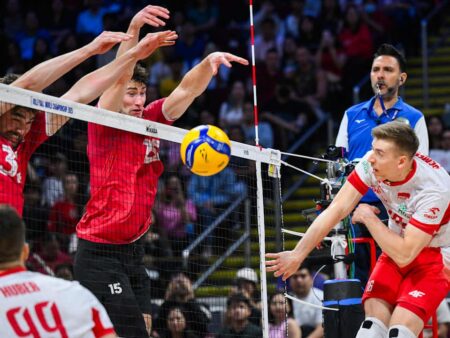
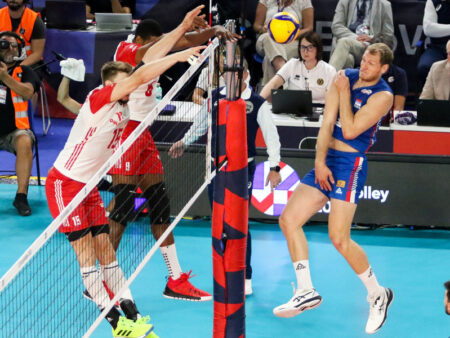
Reflecting on her tenure leading Italy`s U19 national team at the World Championship in Croatia and Serbia – an experience gained after years of close collaboration with coaching legends like Julio Velasco and especially Marco Mencarelli – Roberta regrets that an early tournament injury somewhat hampered her team, though the girls responded admirably. “In the end, it was a truly wonderful experience where we fought with everything we had.”
Maioli was not the sole female coach there; Japan also had a woman at its helm. “For me, it was a great opportunity to observe firsthand other approaches and how countries worldwide operate. I had, of course, seen videos before, but such proximity was highly beneficial. Regarding the role of female coaches, I think the sight of a female head coach is becoming more and more ‘normal,’ so to speak. However, I believe female coaches should be judged on merit, not appointed to a role ‘just’ because they are women. Naturally, opportunities must be provided, and we need to ensure a level playing field, but it is up to us to prove ourselves and demonstrate that we deserve such roles.”

Finally, a few more words of wisdom for colleagues also working with youngsters: “It`s crucial to communicate openly and frankly, to establish an emotional connection with athletes – without conveying any sense of stress or pressure. They should feel empowered and a sense of trust from our side so they can believe in themselves and their abilities. Simultaneously, they should develop a degree of self-reliance and learn to work independently. A coach isn`t always there to provide immediate solutions, but rather to equip players with the tools they need to make the right choices. Furthermore, to all women out there, I would say this path demands much passion and energy, but I have enjoyed every single step of the process so far!” As the Latin adage goes, ad maiora, Roberta!