
In the realm of beach volleyball, while players are the visible performers on the sand, the coach embodies the role of a meticulous programmer, intricately designing the game plan before a single serve. This distinction between indoor and beach volleyball coaching is profound. To illuminate the dedicated, often unseen efforts of these mentors, my “Secrets of Coaching Success” series delves into the minds of Europe’s most accomplished beach volleyball coaches, offering fans an unparalleled look into their strategies and insights.
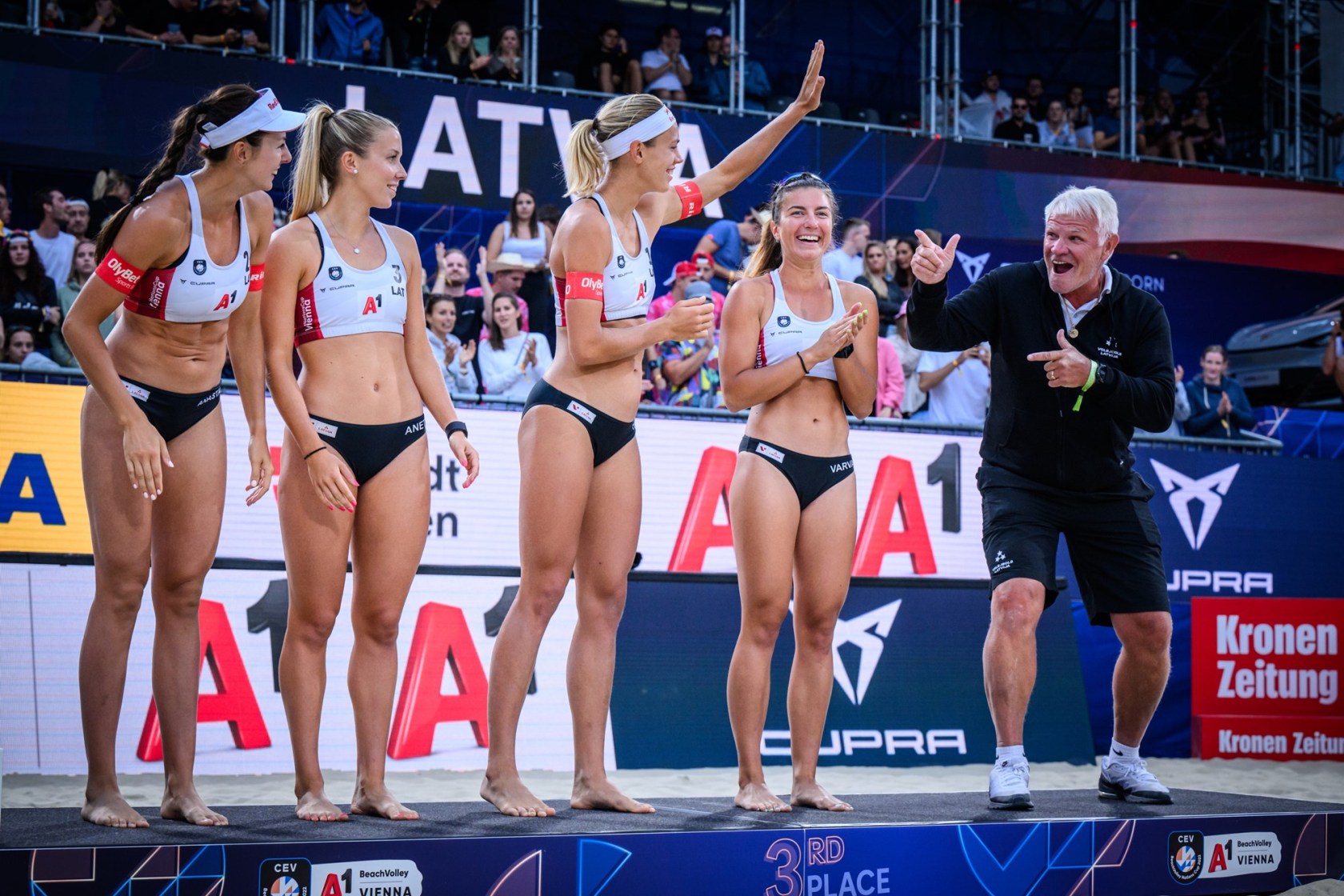
Birzulis on the Nations Cup podium with the Latvian women’s national team
This sixth installment of the series spotlights Aigars Birzulis, the esteemed Latvian beach volleyball coach. His extensive resume boasts numerous medals from major international competitions across senior, junior, and youth categories, notably including a bronze at the London 2012 Olympics. Most recently, he guided Anastasija Kravcenoka and Tina Graudina to a triumphant continental title at EuroBeachVolley 2022. Below is the comprehensive interview he shared with us.
What inspired your transition into beach volleyball coaching? How do the coaching dynamics in traditional volleyball compare to those in beach volleyball?
“My coaching career began in the early 1990s, leading youth national teams in Latvia. We used beach volleyball as a summer training method to maintain fitness. I recall the first junior European Championship in Dubulti, Latvia, in 1997, where our male athletes secured first and third places. That marked my foray into beach volleyball coaching. Initially, I viewed it as merely another form of indoor volleyball, but I now only partially agree. The core difference lies in player motivation; unlike indoor volleyball where substitutions are possible, beach volleyball demands immense mental and physical resilience from its two players, as there are no replacements.”
Your recent significant achievement was guiding Tina and Anastasija to the EuroBeachVolley title. Could you share your thoughts and feelings from that memorable moment on the sidelines?
“It was an immense honor when the Latvian federation entrusted me with coaching our teams for the Nations Cup and the European Championship, and I am truly thankful for that opportunity. At that time, Tina and Anastasija were without a coach and specifically requested my assistance for the European Championship. Having previously worked with them during their junior years, I was already familiar with their dynamics. This familiarity meant I felt no pressure, and together, we successfully achieved a fantastic outcome.”
Often, a beach volleyball coach operates as an employee of the duo they coach. Could you elaborate on the psychological aspects of this unique player-coach relationship?
“A strong coach-player relationship is absolutely essential for achieving results. Without it, success is elusive. It’s crucial to understand each player as an individual, as well as their collective roles within the team. Fostering positive relationships among all team members – from players to coach and vice versa – is paramount.”
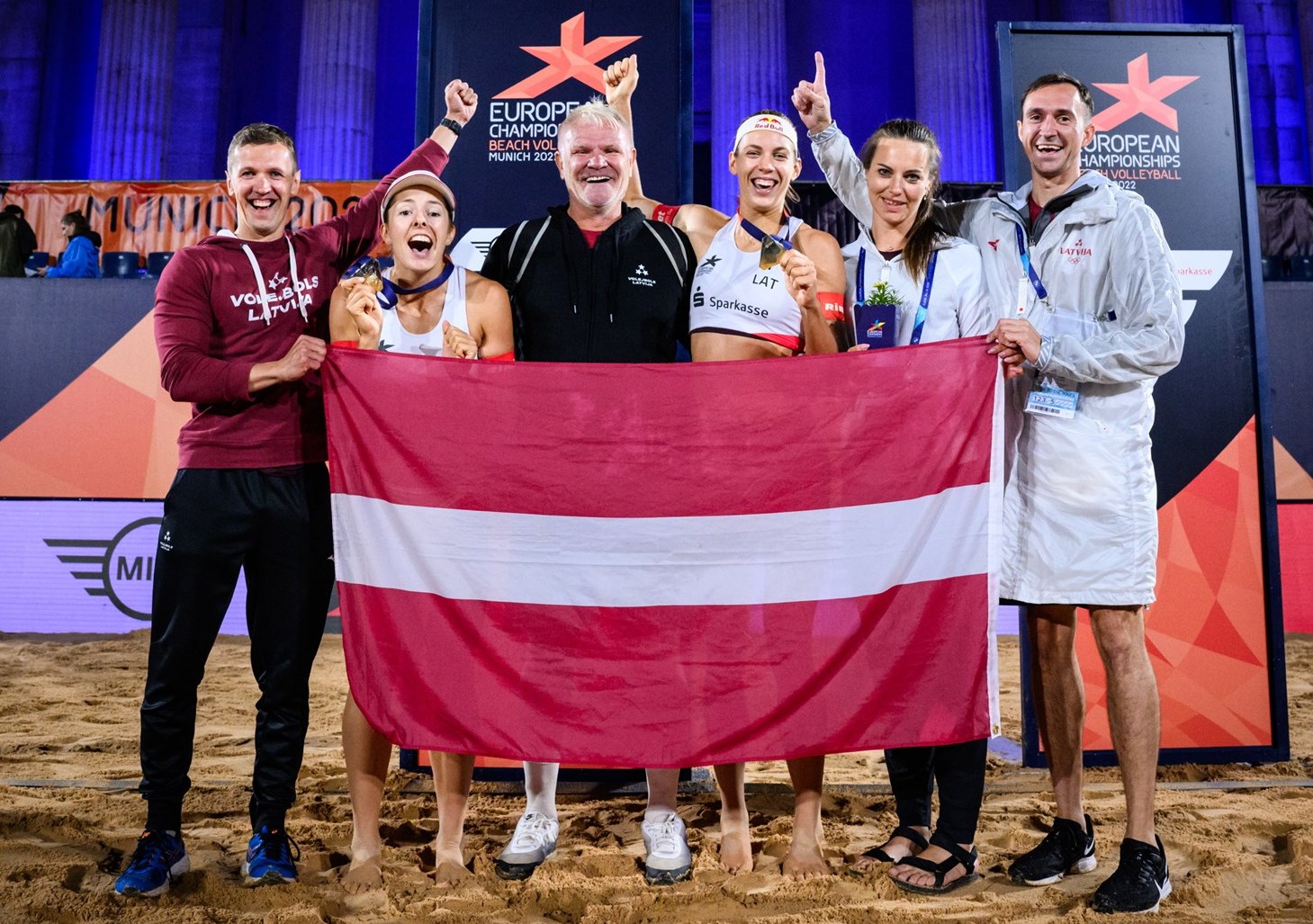
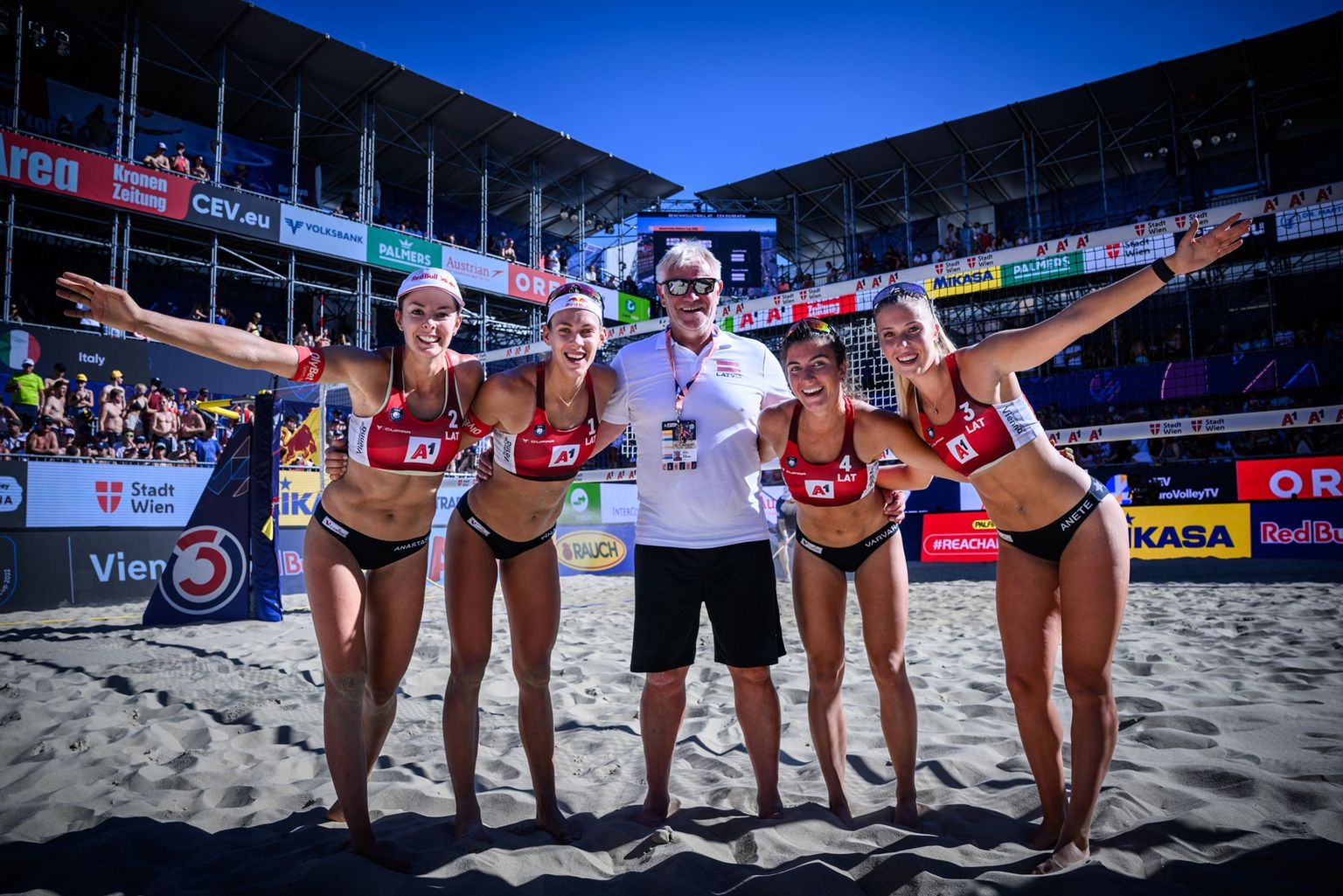
Celebrating Tina & Anastasija’s continental title in 2022
Unlike indoor volleyball, coaching during beach volleyball matches is generally prohibited. What is the rationale behind this rule, and would you advocate for its change?
“Beach volleyball has adopted many organizational elements from tennis competitions, some of which are beneficial and some less so, such as the prize money structure. I believe that to showcase beach volleyball’s potential and enhance its spectator appeal, coaches should be permitted to interact with players during matches. A coach’s ability to make significant in-game adjustments can dramatically elevate the quality of play, as was evident during the Nations Cup and various youth championships where coaching was allowed.”
Given this rule, beach volleyball coaches rarely receive media attention and largely remain unknown to the general public. Is this beneficial or detrimental to the sport?
“I firmly believe this situation is detrimental and warrants change. It hinders the sport’s broader appeal. Just as in any sport, it`s not solely the players who dedicate their time, effort, and passion. Coaches contribute equally, which is precisely why they are integral to the team. In some instances, coaches even exhibit greater passion than the players themselves.”
The recent CEV Nations Cup, where you coached the Latvian women’s national team, presented a unique experience. Could you share your insights from that competition?
“First and foremost, I want to extend my gratitude and commend the Austrian organizers for orchestrating such a magnificent event, complete with an incredible crowd. I`ve always felt that, dating back to the Klagenfurt tournaments, Austria consistently features the best DJs who are masters at crafting an exhilarating atmosphere. This environment empowers players to perform freely, which is crucial. In such an electrifying setting, every player and coach strives for their best, and ultimately, everyone feels like a winner.”