
For most of its history, tennis thrived on a system built on elegant yet sometimes harsh trust. The umpire’s decision was final, and line calls, while instant and imperfect, were accepted. Players might react with frustration or even anger, but the game consistently moved forward. There was a certain fatalism to this approach: the sport acknowledged human error and collectively deemed it an acceptable compromise for the integrity of uninterrupted play.
Predictably, technology soon emerged, promising a more precise sporting environment. Hawk-Eye initially resolved the issue of incorrect line calls. More recently, since February of last year, video review has been implemented across all courts at the nine ATP and WTA Masters 1000 tournaments, aiming to address hindrances and foul shots much like electronic line-calling did for baselines. While the underlying concept was solid, its practical application is slowly devolving into a disaster.
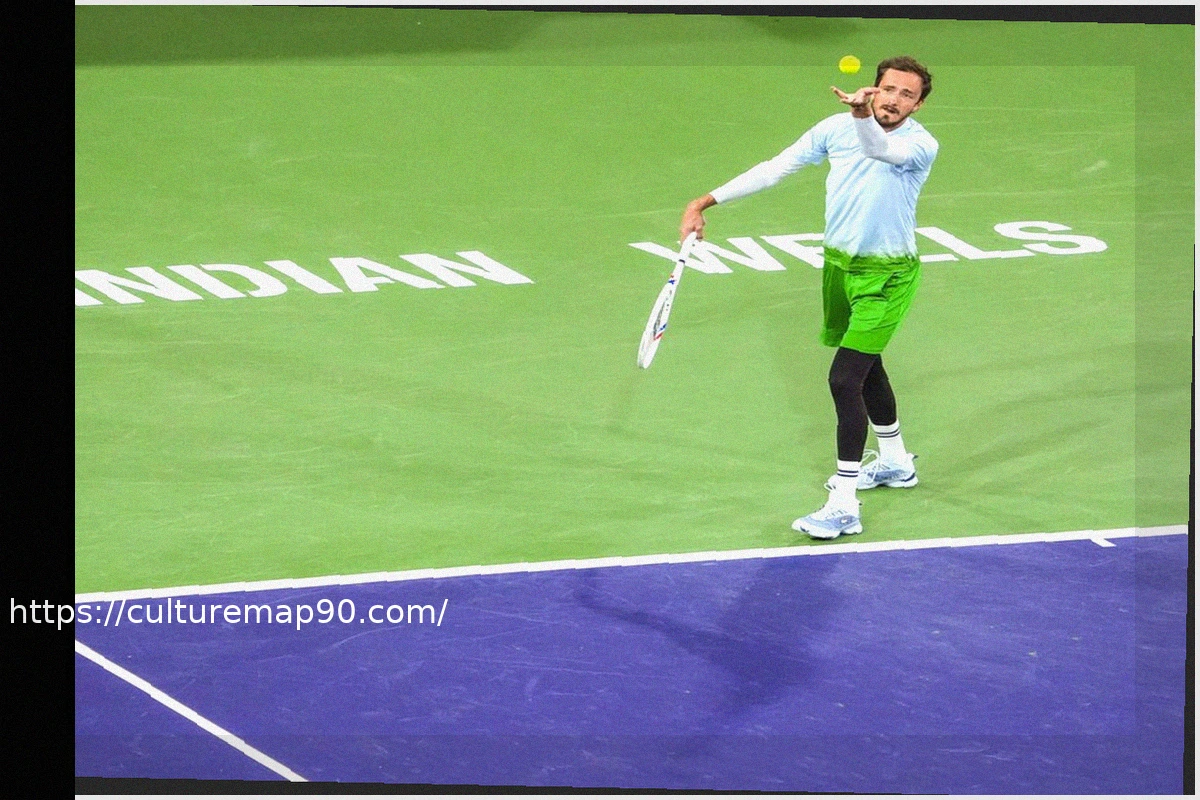
The incident at Stadium 2 in Indian Wells on Friday provides the clearest example yet of this system being misapplied to address something it was never designed for: the retrospective complaint.
The Moment That Sparked Controversy
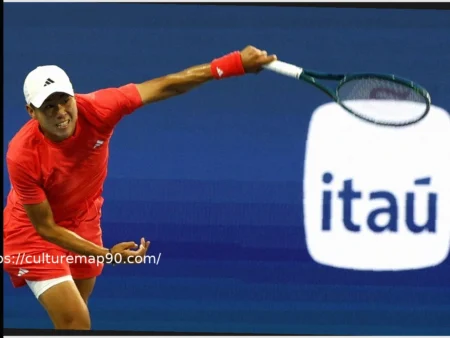
The precise details of the incident are crucial. With Daniil Medvedev leading 6-1 and the second set tied at 5-5, Jack Draper was serving at 0-15. During the rally, Draper, believing Medvedev’s shot was out, reacted by raising his arms in surprise. However, the point continued, with the exchange lasting for three more shots until Medvedev ultimately hit the ball into the net.
What followed transformed a simple lost point into a major tournament controversy. Rather than proceeding to the next serve, Medvedev approached chair umpire Aurelie Tourte, requesting a hindrance call, claiming Draper’s mid-rally gesture had distracted him. After reviewing the footage, Tourte sided with Medvedev, informing Draper that his action was sufficiently outside the normal flow of play to warrant the call.
The California crowd reacted with hostility, booing loudly during the changeover and again after Medvedev secured the match. Draper, commendably, maintained his composure while systematically challenging the decision’s rationale.
He argued to Tourte that such mid-rally arm raises are commonplace, that the supposed distraction couldn’t have been significant since two additional shots were played afterward, and that the call simply didn’t reflect the on-court reality. At the net, he was gracious yet firm, congratulating Medvedev but clearly stating his disbelief that the gesture caused any genuine distraction.
Medvedev, for his part, was candid. He admitted post-match that he wasn’t significantly distracted and didn’t feel great about the outcome. However, he maintained that he merely utilized the existing rule and left the final decision to the umpire. In essence, he acted within the system’s bounds; therefore, the system itself is the problem.
The Outcome-Dependent Challenge
This highlights the core flaw of the current rule, a point eloquently articulated by Aryna Sabalenka after her semifinal win that same weekend. The world number one pinpointed the inherent absurdity: a player can complete an entire point, realize they’ve lost it, and only then request a hindrance review. Sabalenka contended that if a distraction were truly debilitating, the affected player would stop play immediately rather than continuing the rally for several more shots.
The very act of a player waiting for the outcome before deciding if they were distracted reveals the true nature of such complaints. Had Medvedev won the point, no review would have been requested, implying the distraction would have been deemed negligible.
This crucial observation undermines the entire premise of the rule. It makes the system outcome-dependent, suggesting it’s less about genuine distraction and more about gaining an advantage.
In football, the analogous technology, VAR (Video Assistant Referee), offers a telling and damning comparison. Intended to correct clear errors, VAR instead fostered a culture of retrospective scrutiny, leading to goals disallowed for minute offsides and decisions reviewed long after the immediate emotional impact. Far from making football significantly fairer, it has arguably rendered it more contentious, paranoid, and ultimately less enjoyable to watch.
Former Australian professional John Millman voiced the escalating frustration on social media, pointing out that video review has led to an excessive number of hindrance calls and imploring the ATP and WTA to intervene before the issue escalates. The argument itself isn’t complex; rather, the difficulty lies in its political implications.
Two Faces of a Flawed System
Sabalenka herself experienced the rule’s peculiar application at the Australian Open when an umpire called a hindrance against her mid-rally for an unusual “double-grunt” during a point against Svitolina. She recounted that the call was unexpected and bewildered everyone on court, including Svitolina, who appeared visibly confused by the interruption.
These represent two distinct misapplications of the same faulty tool: one where the umpire intervenes unsolicited over a minor sound that surprised no one, and another where a player delays their complaint about a seemingly non-disruptive gesture until after the point’s outcome. Neither scenario builds confidence; both actively erode trust in the system.
A Clear Path Forward
The answer isn’t to abolish video review entirely, as it holds genuine value in clear-cut hindrance cases, such as when a player deliberately attempts to disrupt an opponent. Instead, the solution lies in a straightforward procedural adjustment: if a player genuinely believes they’ve been hindered, they must stop play immediately and vocalize it. They shouldn’t be allowed to play several more shots, lose the point, and only then raise a complaint. The rule requires a temporal boundary, ensuring that the claim of distraction aligns with the actual experience, rather than being retrospectively invoked after a lost rally.
Draper, fatigued from defeating Djokovic less than 24 hours prior, subsequently lost the break, his serve, and ultimately the match. He is set to exit the top 20 in this week’s rankings. While it’s impossible to definitively state whether the hindrance call altered the match’s outcome—Medvedev was largely dominant, and the first set was a rout—this misses the fundamental point. In the most crucial moments of tennis’s biggest tournaments, no one should be left questioning if a result was influenced by a rule that even its beneficiary finds ethically questionable.
Tennis has cultivated a strong reputation over decades for its unique moral code, embodying traditions like calling one’s own shots out, gracefully accepting adverse line calls, and showing genuine sportsmanship. This invaluable culture deserves protection.
A rule permitting players to complete a point, ascertain its outcome, and only then retrospectively claim distraction fundamentally clashes with this ethos. Regrettably, it aligns well with the incentive structures of elite sports. This is precisely why the tour must address this loophole promptly, preventing future tournaments from being defined by video review room decisions rather than on-court action.
The technology itself isn’t the adversary; the procedure is. It’s the procedure that needs fixing.