

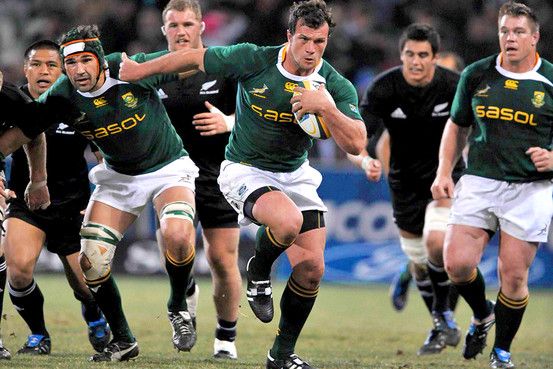
Despite the Springboks` successes, South African rugby faces significant systemic inequality. For the women`s national team to catch up with the two-time World Cup champions, fundamental changes are imperative.
South Africa: At the Pinnacle, Yet Deeply Divided
The South African men`s national team once again asserted its status as a global rugby powerhouse, clinching victory in the Rugby Championship. Simultaneously, the women`s team pleasantly surprised by reaching the quarter-finals of the 2025 World Cup. At first glance, this might appear to be a “golden era” for South African rugby.
However, statistics paint a different picture: a massive 20.58-point rating gap exists between the two South African national teams – and broadly, between men`s and women`s rugby in the country. For comparison, Ireland, next on the list, has a gap of only 11.13 points.
“We have tremendous potential for growth,” stated women`s national team head coach Swaies de Bruin after their match against New Zealand. Indeed, South African women`s rugby players possess all the qualities to contend for top honours in the coming years. But the path to achieving this is long and demands substantial changes.
Key Challenges to Development
1. The Monopoly of a Single Professional Team
Since the Bulls Daisies from Pretoria gained professional status in 2023, they have utterly dominated the domestic scene. Their record is impressive: 37 wins in 38 matches, three consecutive championship titles, and an average points difference of +61 in every game of the 2025 season.
“We desperately need other teams to raise their game,” says Jakkie Cilliers, a Daisies and national team player. “When your team is at its peak, but there`s no worthy competition, you stop growing.”
Of the 23 players who featured in the quarter-final against New Zealand, 13 represented the Daisies. Such a heavy concentration of talent in one club hinders the overall development of the national team, as growth only occurs under intense competition.
2. Limited Attacking Variety
South Africa predominantly employs a power-based rugby style: strong forward drives, effective leadership from Aseza Hele, and pressure through short phases of attack. This approach proved highly successful against Italy and in the first half of the New Zealand match. However, once the opposing defence adapted, the attack became predictable and lost effectiveness. It is crucial for South African women`s rugby to develop attacking width and variability, adding creativity to their physical prowess.
One potential solution could be moving Libby Janse van Rensburg from fly-half to centre. She possesses the necessary power, game vision, and accurate passing, qualities currently lacking in the team`s midfield.
3. Irregular International Fixtures and Lack of a Full-Fledged Tournament
Victories against Italy and a tough contest with New Zealand demonstrated that the South African women`s team can compete with the world`s elite. Nevertheless, their international calendar remains highly fragmented, with excessively long breaks between significant matches.
An ideal solution would be the creation of a permanent Southern Hemisphere tournament, uniting South Africa, New Zealand, Australia, and island nations. If this is not feasible, participation in European competitions, such as the Women`s Nations Cup, with matches across two continents, should be considered. Such a regular competitive system would provide essential exposure to different playing styles, refereeing standards, and the intensity currently lacking in the team.
4. Insufficient Experience in Elite Leagues
Even the Daisies` domestic dominance cannot compensate for the invaluable experience offered by world-class professional leagues, such as the English Women`s Premiership. This league alone supplied 129 players to the 2025 World Cup, including leading athletes from England, Canada, and Wales.
Several South African players have already performed successfully there: Zintle Mpupha (Exeter), Babalwa Latsha, Aseza Hele, Danelle Lochner (all Harlequins), and Catha Jacobs (Saracens, then Leicester). “Everything I learn in England, I want to bring home,” Latsha shared. “I want to help our rugby grow.”
Players returning from European championships undoubtedly bring a new level of skill in game analysis, physical conditioning, and decision-making. Therefore, South Africa needs to establish official mechanisms to facilitate its players` participation abroad, ensuring this invaluable experience returns to and develops national rugby, rather than being lost.
South African women`s rugby has indeed made significant strides. However, as long as its development relies on a single professional team, irregular international matches, and limited resources, achieving parity with the “men`s world” of rugby will remain an immense challenge.