

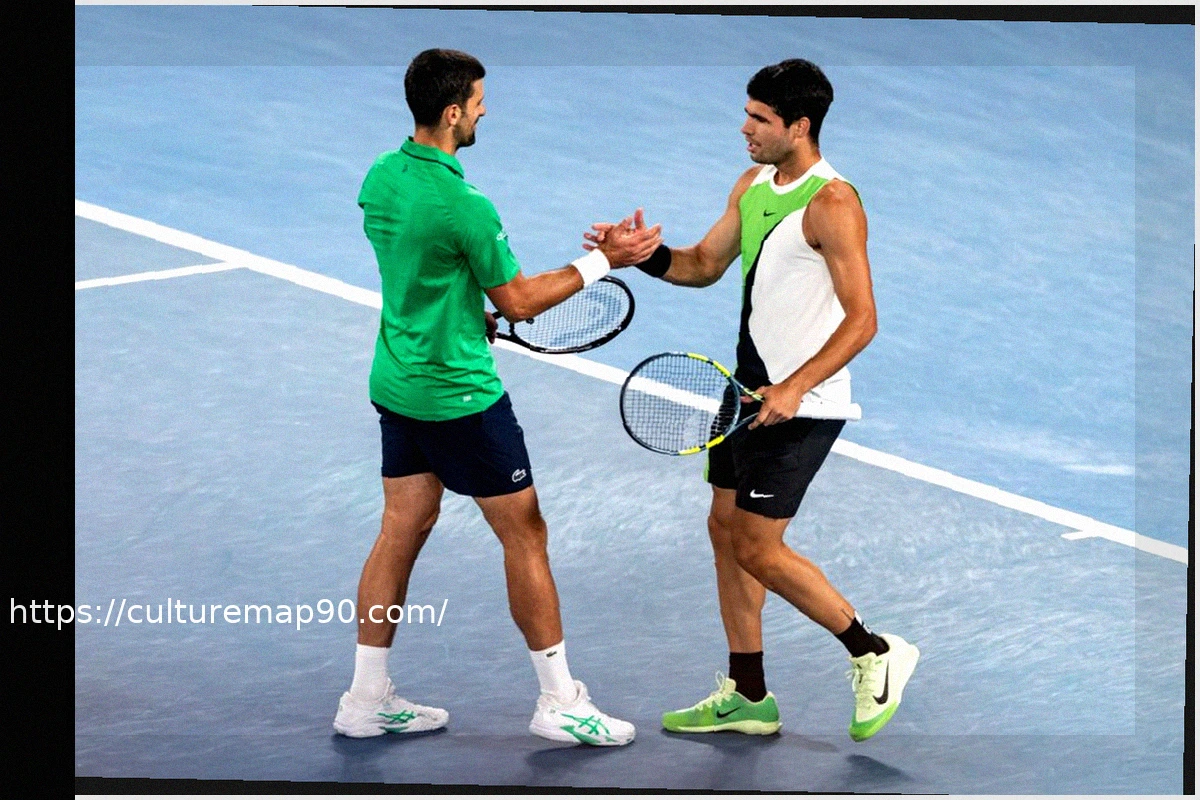
Significant news recently emerged, anticipated by many yet unprepared for by all. According to a New York Times investigation, SURJ, Saudi Arabia’s sovereign investment arm for sports, is actively pursuing the acquisition of tournament licenses for both the Acapulco and Buenos Aires events. Their strategy is clear: acquire the licenses, discontinue these competitions, and free up calendar space for the expansion of their tennis initiative. The reaction was swift, vocal, and almost universally hostile. Social media platforms were inundated with farewell messages mourning the fervent Mexican crowds and the clay courts of Buenos Aires. Pundits invoked the term “sportswashing.” Tennis enthusiasts watched with dismay as decisions regarding their beloved sport were made without their input. Their anger is justified. Nevertheless, from the viewpoint of those holding actual power within tennis, fan sentiment in this matter holds little to no relevance.
Why Saudi Arabia’s Integration into Tennis Benefits the Sport
The Unarticulated Truth
Here is the unarticulated truth of this narrative: Saudi Arabia’s increasing involvement in professional tennis, measured by any metric used by the sport’s governing bodies and players to define success, is largely beneficial. Concurrently, it’s detrimental to fans, the sport’s cultural essence, and some of the calendar’s most vibrant events. All these points are also valid; they simply aren’t the factors determining outcomes, nor have they ever been. Follow the money, as financial leverage is the ultimate arbiter in professional sports. Saudi Arabia’s Public Investment Fund has secured the license for what will become the tenth Masters 1000 event, the first such top-tier addition since the category’s inception in 1990, scheduled to be held in Riyadh starting 2028. This financial injection includes funding for an ATP buyback pool—a system allowing the tour to reacquire licenses from existing events and distribute expansion fees as compensation to all current members for welcoming a new participant. In essence, Saudi capital doesn’t merely establish a new tournament; it disseminates across every existing event, bolstering the financial stability of a calendar that has been commercially precarious for decades.
Players Set the Precedent
Players grasped this reality sooner than the administrators did. At last October’s Six Kings Slam, an exhibition event in Riyadh that has become tennis’s most financially remarkable non-Grand Slam occasion, every participant was guaranteed $1.5 million simply for appearing. The victor took home a total of $6 million. For perspective, this champion’s prize surpasses the first-place payout at any Grand Slam, including the record-setting 2025 US Open, where Alcaraz earned $5 million. When asked about his presence in Riyadh, Alcaraz remarked, “If I say I went there just for fun and to forget the money, I’m going to lie.” Taylor Fritz was even more direct: “I’d love for them to show me a tournament where you can play three matches — well, two matches for the top two seeds — and potentially make $6 million.” They all attended: Sinner, Alcaraz, Djokovic, Fritz, Zverev, Tsitsipas. There was no boycott, no discomfort concerning human rights, and no agonizing. They played tennis in Riyadh, collected their earnings, and returned home. Any narrative suggesting players harbored moral reservations strong enough to impede this process quietly dissipated in that arena.
The WTA Tour’s Parallel Decision
The Women’s Tennis Association (WTA) arrived at the same conclusion, albeit less overtly but with even greater ramifications. The 2024 WTA Finals were relocated to Riyadh, boasting a prize pool of $15.25 million, a 69% increase from the prior year. The human rights controversy surrounding this decision was undeniable: Saudi Arabia’s record on women’s rights is well-documented and troubling, and critics genuinely argued that hosting a women’s tennis championship there legitimized the regime and undermined women’s rights activists imprisoned for seeking equality. Despite this, all eight of the world’s top female players attended. The total prize money for the 2025 WTA Finals reached a record $15.5 million, with a further increase guaranteed for 2026. The WTA, which had spent years in a losing battle for prize money parity with the men’s tour, found in Saudi Arabia the sole partner willing to bridge that gap swiftly and unconditionally. Overall, WTA prize money soared to a record $249 million in 2025, a 13% increase over the previous year, with a significant portion of this growth fueled by Saudi funding. One can certainly raise moral objections to this; many do, and with good reason. However, it’s inconsistent to advocate for pay equality in women’s tennis while simultaneously rejecting the only entity prepared to finance it at the necessary pace.
The True Cost: What Is Sacrificed
Now for what will genuinely be lost: the tournaments in Acapulco and Buenos Aires. It’s safe to assert that these are among the calendar’s most spirited, enthusiastically attended, and vibrant events. The Buenos Aires crowd, infused with South American clay-court fervor, represents an element the sport cannot replicate with money. The devoted Mexican fans at Acapulco transformed Felix Auger-Aliassime’s title run into a national spectacle and have, for years, imbued the tournament with an atmosphere most Masters events would pay any price to emulate. This is a cultural asset the sport seems prepared to exchange for a February Masters slot in a city where corporate attendees fill the stands, and few others show genuine interest. The players won’t truly perceive this. Or rather, they’ll grasp it abstractly, understanding the atmospheric significance of those crowds. Yet, they won’t organize protests, decline participation, or jeopardize their relationship with the entity that just made the Six Kings Slam the most lucrative non-Slam event in tennis history. ATP chairman Andrea Gaudenzi has clearly articulated his vision: a February calendar featuring a Middle East swing, with the Saudi event as its centerpiece. Fans from Buenos Aires and Acapulco do not feature in this vision. They are merely collateral damage in a calendar optimization exercise.
A Takeover Already Realized
Saudi Arabia’s Public Investment Fund (PIF) already acts as the naming-rights sponsor for both ATP and WTA rankings, has forged strategic alliances with Masters events such as Indian Wells, Miami, and Madrid, and finances the Next Gen ATP Finals in Jeddah until at least 2027. Rafael Nadal serves as an ambassador for the Saudi Tennis Federation. Their influence is pervasive. This isn’t a takeover in progress; it’s one that is largely complete, unveiled incrementally as each new acquisition is confirmed.
The Remaining Crucial Question
The question of whether Saudi money benefits tennis is no longer pertinent. By the metrics the sport uses to evaluate itself—prize money, calendar structure, infrastructure investment, and commercial partnerships—the answer is unequivocally yes. The true question is whether these are the only relevant criteria. Can a sport dismantle its most fervent fan communities, relocate its most atmospheric events to the Gulf, and still maintain its original identity? Fans will inevitably lose, as they always do when such decisions are made, and always without consultation. The Mexican fans who breathed life into Acapulco. The Buenos Aires crowd, who wept at defeats and sang in triumph. Nobody asked them, and nobody will. Players received their $1.5 million appearance fees. The tours secured their buyback funds and expansion payments. The ATP gained its tenth Masters 1000 event. The Saudi sovereign wealth fund achieved its objectives. Meanwhile, tennis is effectively relocating to Riyadh. Dress code to be confirmed.